Image

My project examines Japan’s “new” and “old” Chinatowns through the lens of linguistic landscape — the study of how language is visually presented in public spaces.
This summer, with the generous support of APSI, I was enabled to conduct fieldwork that brought me from Tokyo’s Ikebukuro to Yokohama’s famous Chinatown. For nearly two weeks, I wandered like a flâneur, with notebook in one hand and phone in the other, switching back and forth between the camera app and Google Maps, pausing every so often to jot down whatever came into my eyes.
By looking closely at signboards, menus, posters, and other public texts to understand who they address and what kind of community they construct, I trace how these visible forms of language shape the way we imagine “Chinatown” itself.
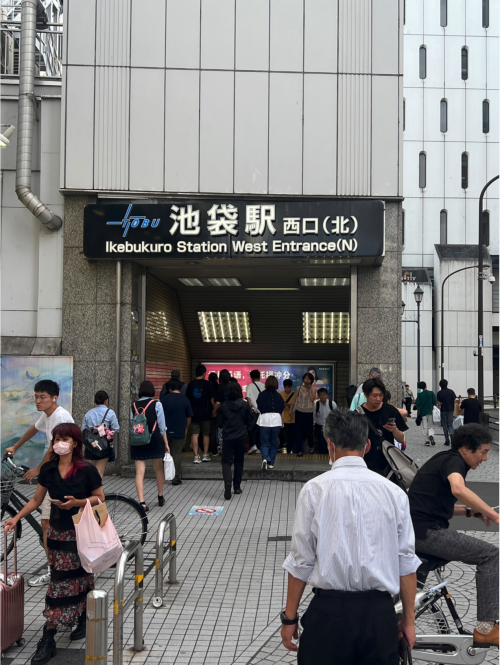
Ikebukuro was my first stop, and it immediately defied my expectations. Frequently described in media and academic research as Tokyo’s “new Chinatown,” it proved to be far less visually recognizable than I had anticipated.
The word “Chinatown” often evokes images of grand gates, red lanterns, and bold gold lettering, yet Ikebukuro has none of these. Its so-called “landmark” is a modest grocery store called Sunshine City, which one could easily pass without noticing.
I spent my days there weaving through side streets, recording which signs appeared in Chinese, Japanese, or both, and which seemed intended only for those familiar with the community.
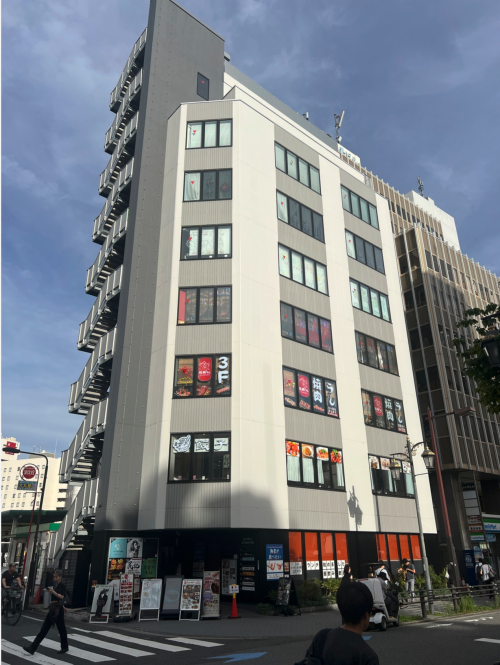
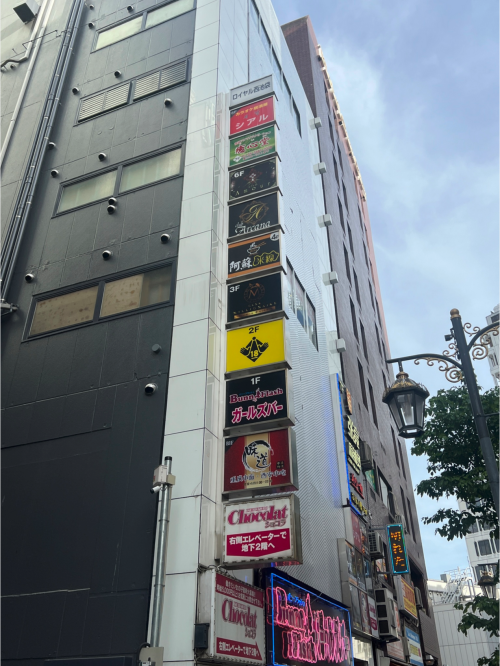
In most cases, it is not easy to notice Chinese signage when simply walking down the street. Such signs often become visible only when one tilts their head upward to spot a restaurant or office sign high above, or when approaching closely enough to realize that the text on the signboard is not entirely in Japanese. Climbing to the second floor of what appeared to be an ordinary narrow staircase in a commercial building, however, I found that every notice, advertisement, and label was in Chinese— a sudden shift that felt like stepping into a different linguistic world hidden above the streets of Tokyo.
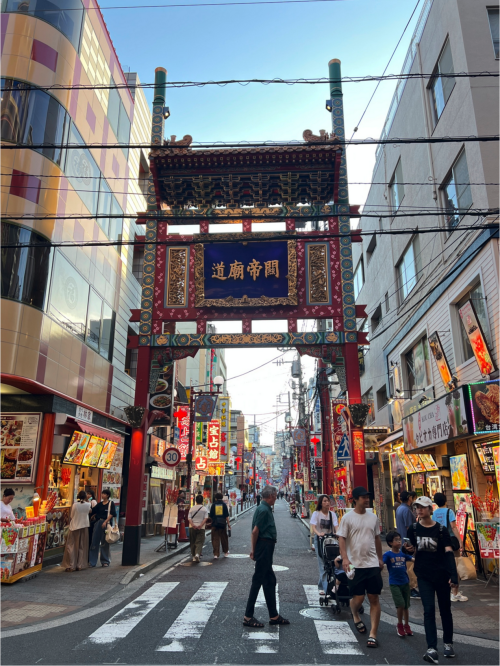
In contrast, Yokohama’s Chinatown — Japan’s largest and one of its oldest — is a burst of visual spectacle. The grand gates mark clear entry points from all directions, and the streets are lined with themed decor, from faux-traditional architecture to red-and-gold signboards. Here, language is part of an established tourist performance: Chinese is highly visible and occupies a dominant position in the overall appearance of the streetscape, yet the actual convey of information is largely conducted in Japanese. Menus are multilingual, signs often switch between simplified and traditional characters, and English appears alongside Japanese and Chinese for the benefit of international visitors.
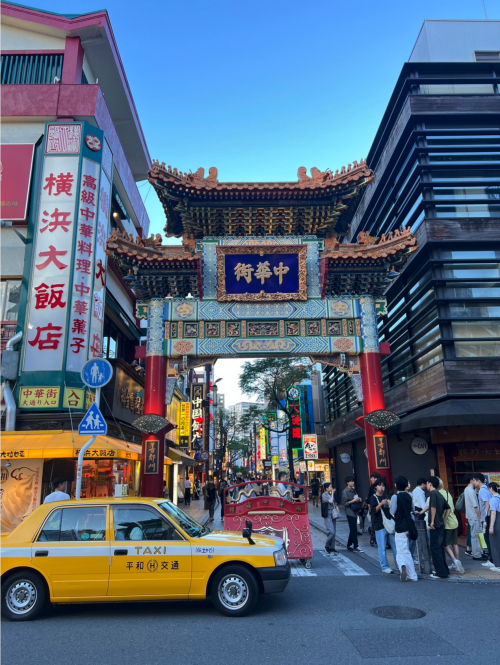
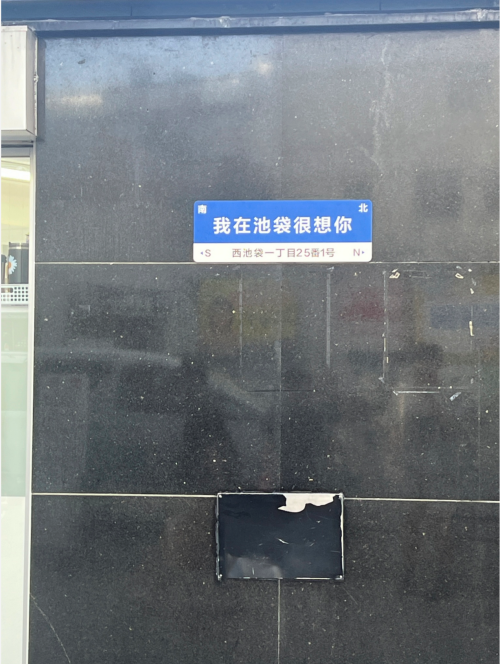
Spending time in both Ikebukuro and Yokohama has made me think about “Chinatown” not just as a place, but as an idea — and a contested one. “Chinatown” is not a purely descriptive geographic term, but a label defined and redefined by different voices. Historically, this naming has often come from outside — from city governments, tourism boards, the media, or urban planners. As such, the term itself is a discourse of power: it carries questions of who has the authority to name a space, and who decides which features are highlighted and which are ignored.
In official narratives — whether in urban planning, academic research, or media coverage — Ikebukuro is presented as Tokyo’s “Chinatown.” Yet, viewed through the lens of linguistic landscape, it diverges sharply from the conventional image of a Chinatown.
In Yokohama, multilingual and decorative signage performs “Chinatown” for a broad, mixed audience, whereas in Ikebukuro, the clear separation between inner and outer spaces, the prevalence of Chinese-only signs, and the use of in-group puns speak to a more specific community, at times rendering the space almost invisible to outsiders. This contrast points to a paradigm shift in what “Chinatown” can mean today.
In a globalized world, diasporic communities are creating new versions of Chinatown that do not always fit the old mold: they may be dispersed across several blocks with no clear entry gate, or exist partly online through food delivery apps and social media. These spaces still connect to older Chinatowns through shared networks, cuisines, and languages — but their shifting linguistic landscapes quietly reveal who they are for, and how the idea of “Chinatown” itself changes over time.
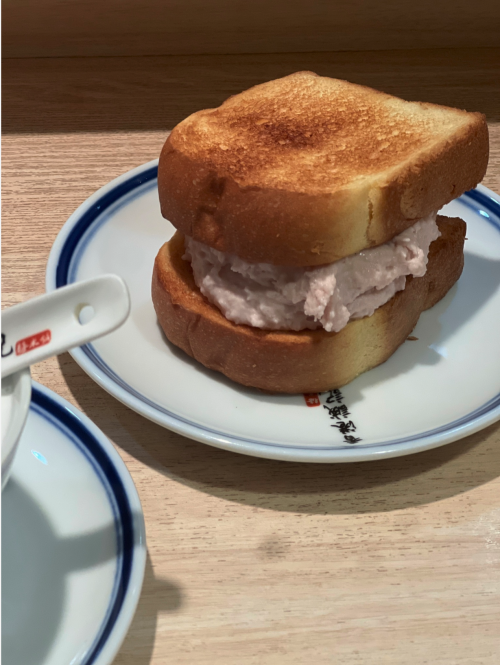
Some days in the field ended with my legs sore from walking and my phone full of photos of signs, menus, and shopfronts.
Other days ended with me trying what I assumed would be another plate of inauthentic “Chinese” food, but ended up being surprised by how good it was.
I am grateful to APSI for giving me the opportunity to carry out this fieldwork, which allowed me to revisit and rethink what “Chinatown” means in different contexts, and to reflect on how these spaces continue to evolve in a globalized world.